
Last reviewed: June 2026
Yes, billboard advertising still works in 2026, especially in places like London where repeated local visibility really matters.
It is a fair question to ask, because the media landscape has changed and attention is split across more channels than ever. But outdoor advertising still earns its place.
That is not just industry talk. The numbers back it up.
The Real World Has Not Gone Anywhere
Before looking at the figures, it helps to remember what outdoor advertising does so well. It shows up where people already are, and that is something most other channels still struggle to match cleanly.
A commuter sees the same route every day. A driver passes the same junction on the school run or commute. A shopper moves through the same high street week after week. Outdoor sits inside those routines rather than trying to interrupt them.
That matters because visibility in the real world tends to feel more natural, and often more believable, than a message fighting for attention online.
What the Numbers Confirm
The reach figure comes from Outsmart’s Route 2025 data, which says out-of-home advertising reaches 97% of the UK population weekly. That is a serious level of exposure for any channel.
WARC also shows that outdoor can drive meaningful ROI in UK retail campaigns, and one study found a 17% uplift in smartphone brand actions after OOH exposure. In other words, the medium is not only being seen, it is also pushing people closer to action through the same digital channels that were meant to replace it.
Taken together, those findings shift the conversation. Outdoor is not competing with digital. In many cases, it makes digital work harder.
Familiarity Is the Product
The strongest effect roadside screens and premium outdoor placements create is not always an instant response. More often, it is familiarity.
When a brand keeps appearing in the places people move through, it starts to feel more established. Recognisable. Part of the landscape.
That is not a small thing. Familiarity lowers resistance, shortens the decision cycle, and makes the brand feel like the safer choice when the moment to act finally arrives.
Billboards do not always generate clicks. They often generate the trust that makes the click matter. That is why they sit so naturally beside brand awareness.
Format and Location Are Strategic Decisions, Not Afterthoughts
Digital and static formats both work, but they do different jobs.
Digital out-of-home is useful when flexibility matters, whether that is rotating creative, changing offers, or speaking to different audiences at different times of day. Static works better when the goal is consistency and repeated exposure over a longer period.
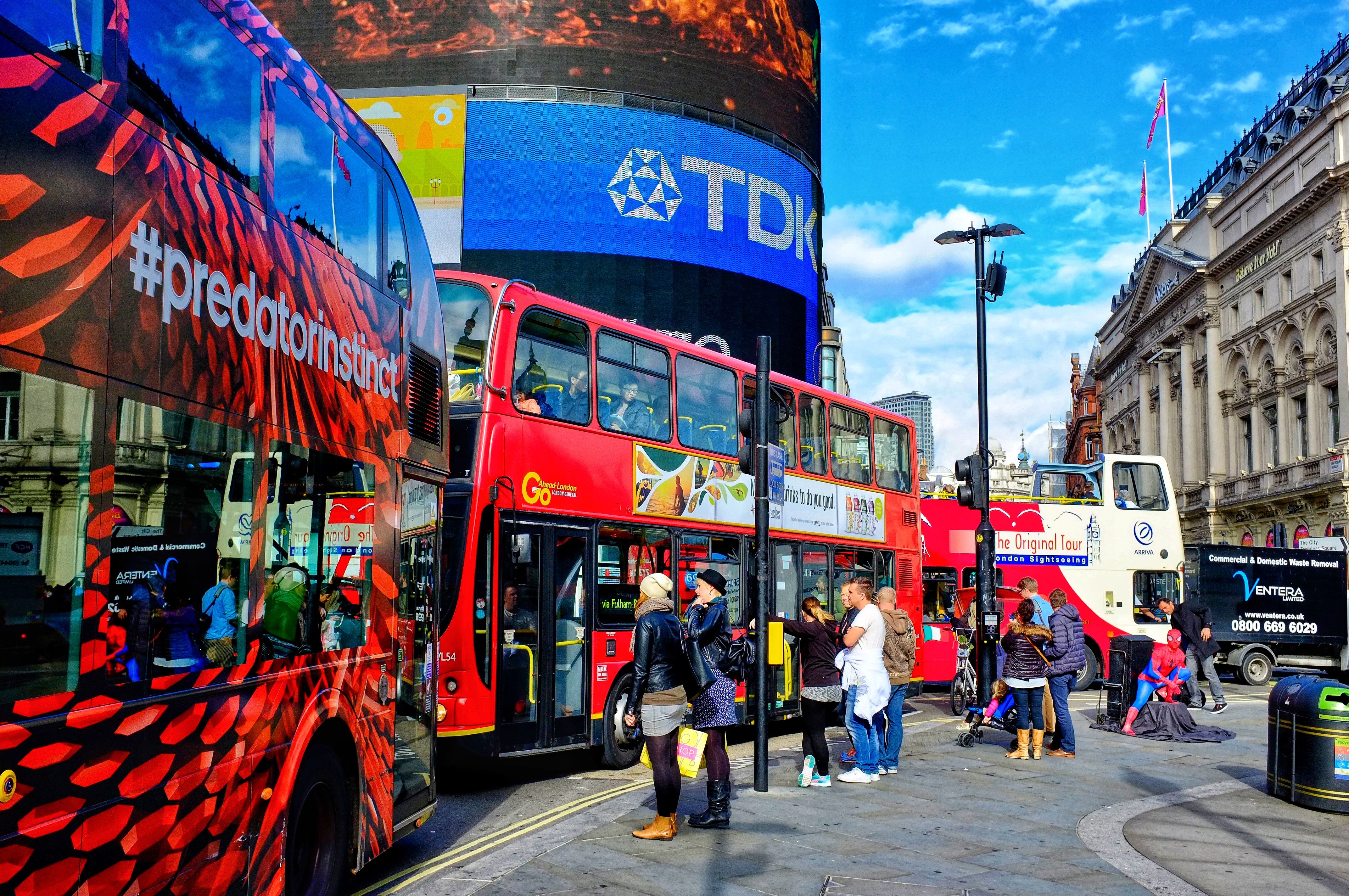
Location shapes everything else. In London, high density and constant commuter movement create strong conditions for repetition and recall. A well-placed billboard in the right part of the city can do serious work without needing national scale. That is why billboard advertising in London deserves its own strategy.
For smaller businesses, the same logic still applies. Local visibility in one borough or trading area can be more effective than spreading budget too thin, which is why billboard advertising for small businesses often performs best when it stays focused.
If you are weighing up different formats, digital vs static billboards is the right comparison to make.
Where Outdoor Advertising Falls Short
Billboards are not an automatic win. They reward clarity and punish confusion.
A person only gives a roadside screen a few seconds at most. If the message tries to do too much, it usually does nothing at all.
The campaigns that underperform are rarely suffering because the channel is wrong. More often, the creative is unclear, the location is off, or the run is too short to build any real repetition. Sustained presence is what gives the medium its edge.
Judging Performance Honestly
Outdoor should not be judged like a last-click channel. That usually leads to the wrong conclusion.
Its role is to build recognition, strengthen credibility, and support the channels that come after it. If you measure it only by immediate response, you miss most of the value.
A better way to assess performance is through branded search, recall, traffic from the campaign area, and store visits where that data is available. For a fuller breakdown, see measuring advertising ROI. If the question is more commercial, billboard ROI gives a better frame for the return.
The Practical Takeaway
Billboards still earn their place in 2026 because the basic mechanism has not changed: repeated physical presence creates familiarity, and familiarity builds trust.
What has changed is the environment around them. With so many digital channels competing for attention, real-world visibility carries even more weight. A billboard does not need to shout. It just needs to be seen often enough in the right places.
That is a different kind of power.
Before asking for a quote, it is worth looking closely at format, location, and duration together so the campaign has a better chance of working properly.
Source Note
The reach figure in this article is drawn from Outsmart’s Route 2025 data, which states that OOH reaches 97% of the UK population weekly. WARC reporting supports the effectiveness and mobile brand-action claims, including outdoor ROI and smartphone brand actions following OOH exposure.
Frequently Asked Questions
Can billboards work for small businesses in 2026?
Yes, especially when the campaign stays local, focuses on one trading area, and repeats enough times to build recognition.
How do digital billboards compare with static ones?
Digital is better for flexible messaging and short-term changes. Static is better when you want repeated exposure over a longer run.
What does ROI look like for billboard advertising in the UK?
It depends on format, location, duration, and audience match, but the strongest results usually come from campaigns that support search, store visits, or wider brand lift.
How long does a billboard campaign need to run?
Long enough for the same audience to see it more than once. Short campaigns can work, but longer runs are usually better for recall.
Can billboard advertising be measured?
Yes. The most useful signals are branded search, recall, traffic from the campaign area, and store visits where that data is available.
Do billboards perform better in London?
Often, yes. London’s density and commuter movement make repeated exposure easier to achieve, which is why local and city-wide campaigns can perform so well there.
Read Next
- billboard ROI
- brand awareness
- digital vs static billboards
- billboard advertising in London
- billboard advertising for small businesses
- measuring advertising ROI